

Ammo & Guns Blog
Bulk 9mm Ammo Buying Guide | Star Gun Shop
Bulk 9mm Ammo Buying Guide: 115 Grain vs 124 Grain, FMJ vs JHP, Brass vs Steel

Bulk 9mm ammo is one of the most common choices for handgun owners, range shooters, training days, and buyers who want to lower their cost per round. Because 9mm Luger is widely used, customers often compare bullet weight, case type, bullet design, brand, and price before ordering.
This guide explains how to choose bulk 9mm ammo with more confidence. It covers 115 grain vs 124 grain, FMJ vs hollow point, brass vs steel case, price per round, and what to check before buying online.
Why 9mm Ammo Is So Popular
9mm Luger is popular because it is widely available, commonly used in handguns, and often more affordable than many larger pistol calibers. Many shooters use it for range practice, training, target shooting, and personal defense where legally allowed.
For online buyers, the biggest advantage is variety. You can usually compare different brands, bullet weights, case types, and box quantities before choosing the right option.
What Does “Bulk 9mm Ammo” Mean?
Bulk 9mm ammo usually means buying larger quantities instead of a single small box. Common bulk options may include:
- 250 rounds
- 500 rounds
- 1,000 rounds
- Case-size quantities
- Multi-box range packs
Buying in bulk can reduce the average price per round. It can also help you keep enough ammunition available for regular range sessions.
Before buying, always confirm that ammunition can legally be shipped to your state and local area.
115 Grain vs 124 Grain 9mm Ammo
One of the most common questions buyers ask is whether they should choose 115 grain or 124 grain 9mm ammo.
115 Grain 9mm Ammo
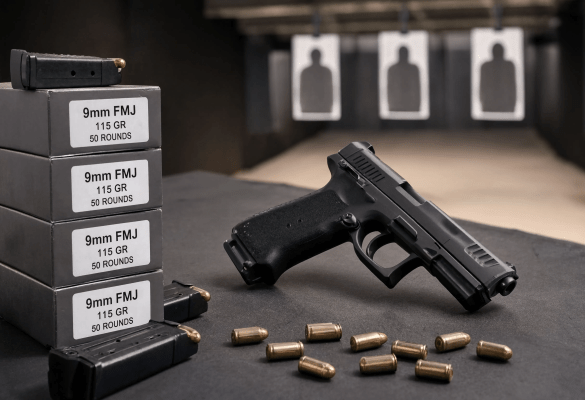
115 grain 9mm ammo is one of the most common range choices. It is usually easy to find, often affordable, and widely used for practice.
It is a good option for:
- Range practice
- General training
- Target shooting
- High-volume shooting
- Buyers comparing cost per round
124 Grain 9mm Ammo
124 grain 9mm ammo is slightly heavier. Some shooters prefer it because it may feel different in recoil and may perform more consistently in certain handguns.
It is a good option for:
- Training with a heavier bullet
- Shooters testing reliability
- Buyers comparing different loads
- Handguns that perform better with 124 grain ammo
Which One Should You Choose?
For most range buyers, 115 grain is a practical starting point because it is common and often cost-effective. If your handgun seems to prefer a slightly heavier load, 124 grain may be worth testing.
The best choice is the one that runs reliably in your firearm and matches your intended use.
FMJ vs Hollow Point 9mm Ammo
Another major difference is bullet type.
FMJ 9mm Ammo
FMJ stands for full metal jacket. This is the most common choice for range practice and training.
FMJ ammo is usually best for:
- Target shooting
- Range sessions
- Practice drills
- Bulk buying
- Lower-cost training
Most bulk 9mm ammo buyers choose FMJ because it is practical for regular practice.
Hollow Point 9mm Ammo
Hollow point ammo is usually designed for defensive use where legal. It is generally more expensive than FMJ and is not usually the first choice for high-volume range practice.
Hollow point ammo may be used for:
- Personal defense where legally allowed
- Reliability testing in a defensive handgun
- Buyers who want purpose-built defensive ammunition
Always follow local laws and range rules when choosing ammunition.
Brass Case vs Steel Case 9mm Ammo
The case material can also affect your buying decision.
Brass Case 9mm Ammo
Brass case 9mm ammo is the most common choice for many shooters. It is widely accepted at ranges and is often preferred for reliability and reloadability.
Brass case ammo is a strong choice for:
- Indoor ranges
- Outdoor ranges
- Training
- Buyers who want broad compatibility
- Shooters who collect reloadable brass
Steel Case 9mm Ammo
Steel case ammo is often purchased because it may cost less. However, not every range allows it, and some firearms may not run it as smoothly as brass case ammo.
Before buying steel case ammo, check:
- Whether your range allows it
- Whether your firearm runs it reliably
- Whether the savings are worth the tradeoff
How to Compare Price Per Round
When buying bulk 9mm ammo online, do not only compare the box price. Compare the price per round.
Use this simple formula:
Total price ÷ total rounds = price per round
Example:
If a 1,000-round case costs $260:
$260 ÷ 1,000 = $0.26 per round
This makes it easier to compare a 500-round deal against a 1,000-round deal.
Also check shipping costs. A lower product price may not be the best deal if shipping is much higher.
What to Check Before Buying Bulk 9mm Ammo Online
Before placing an order, review these details:
- Bullet weight
- Bullet type
- Case material
- Quantity
- Brand
- Price per round
- Shipping cost
- State restrictions
- Local ammunition laws
- Range rules
- Firearm compatibility
If you are buying for a specific handgun, check the owner’s manual and test a smaller quantity before buying a large case.
Best Uses for Bulk 9mm Ammo
Bulk 9mm ammo is usually best for regular shooters who want consistent supply and better value.
Common uses include:
- Range practice
- Training classes
- Target shooting
- Competition practice
- New handgun break-in
- Regular skill maintenance
For most buyers, FMJ brass case 9mm is the safest general-purpose range choice.
Should You Buy 500 or 1,000 Rounds?
If you are testing a new brand or new handgun, start with a smaller quantity first. This helps confirm reliability before you invest in a larger case.
Choose 500 rounds if:
- You are testing a new ammo brand
- You shoot occasionally
- You want a lower upfront cost
- You are unsure what your handgun prefers
Choose 1,000 rounds if:
- You shoot often
- You already trust the brand
- You want a lower price per round
- You want fewer repeat orders
Frequently Asked Questions
What is the best bulk 9mm ammo for range practice?
For most range practice, 115 grain or 124 grain FMJ 9mm ammo is a practical choice. Brass case FMJ is widely used and accepted at many ranges.
Is 115 grain or 124 grain 9mm better?
Neither is automatically better for every shooter. 115 grain is common and often affordable. 124 grain is slightly heavier and may feel different in some handguns. Test both if you are unsure.
Is FMJ good for training?
Yes. FMJ 9mm ammo is commonly used for training, target shooting, and regular range practice.
Is hollow point 9mm good for range practice?
Hollow point ammo can be tested at the range for reliability, but it is usually more expensive than FMJ. Most buyers use FMJ for high-volume practice.
Is brass case better than steel case?
Brass case ammo is more widely accepted at ranges and is often preferred for general use. Steel case ammo may cost less, but some ranges do not allow it.
How many rounds of 9mm should I buy?
That depends on how often you shoot. Occasional shooters may prefer 250 to 500 rounds. Frequent range users may prefer 1,000-round cases to reduce cost per round.
Can 9mm ammo be shipped to my state?
Ammo shipping rules vary by state and local area. Check your local laws before ordering and contact Star Gun Shop support if you are unsure.
Final Word
Bulk 9mm ammo is a practical choice for shooters who want better value, steady supply, and reliable range ammunition. For most buyers, 115 grain or 124 grain FMJ brass case ammo is the best place to start. Compare price per round, check your local shipping rules, and choose ammunition that runs reliably in your firearm.
